Lilly:
Diabetes Tracker
Project Scope: Product Strategy, UX Design, Proof of Concept Build
My Role: Design Lead
Context & Challenge
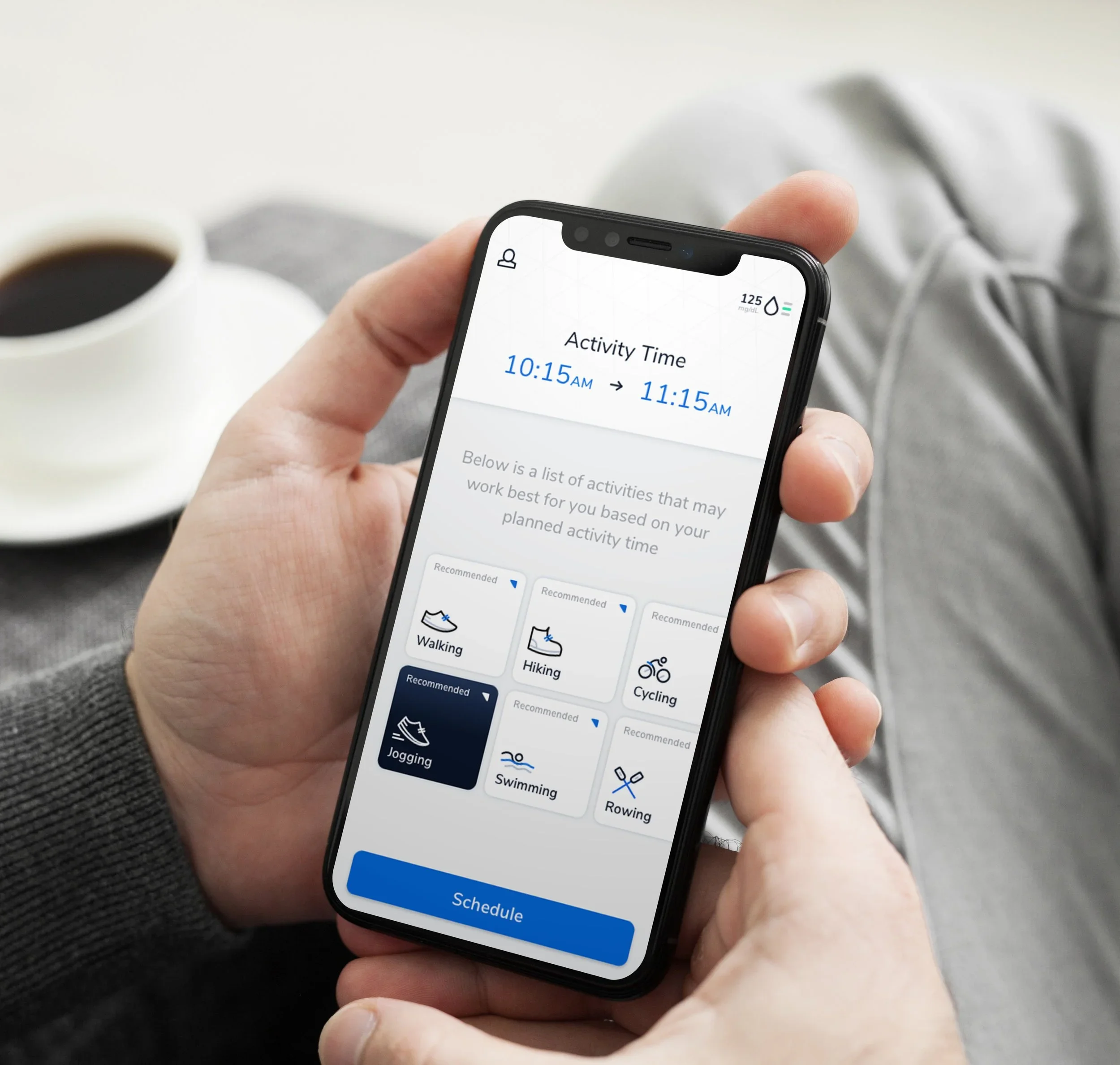
In 2018, Lilly partnered with Intrepid to explore how digital tools could help people living with Type 1 Diabetes exercise more safely and with confidence.
While regular physical activity is proven to significantly improve long-term health outcomes—and can reduce insulin dependency—many people with Type 1 Diabetes avoid exercise altogether. The reason is not lack of motivation, but fear: blood glucose levels are influenced by a complex mix of variables including insulin dosage, timing, activity type, and duration. The risk of hypoglycemia or hyperglycemia during or after exercise creates a high barrier to participation.
The challenge was not simply to design a fitness app, but to create a system that translated complex medical knowledge into actionable, confidence-building guidance for the user—without overwhelming or endangering them.
Our Strategy
We anchored the product around a specific behavioral archetype that was identified previous research: the “Fearful but Willing” user.
These users wanted to exercise. They understood the benefits. But they lacked the confidence, knowledge, and support systems required to plan safely. As a result, they often choose inaction over risk.
To achieve success in the pilot product we needed to create an app that instilled trust, limiting cognitive and emotional load at critical moments.
Research & Discovery
Our team conducted a multi-layered discovery effort that balanced clinical input with human-centered insights:
Subject Matter Expert Interviews
We worked closely with clinicians and diabetes specialists to understand how different activity types, intensities, and durations affect blood glucose and insulin needs.User Interviews
We spoke directly with people living with Type 1 Diabetes to uncover emotional blockers, decision-making patterns, and safety concerns related to exercise.Synthesis & Alignment
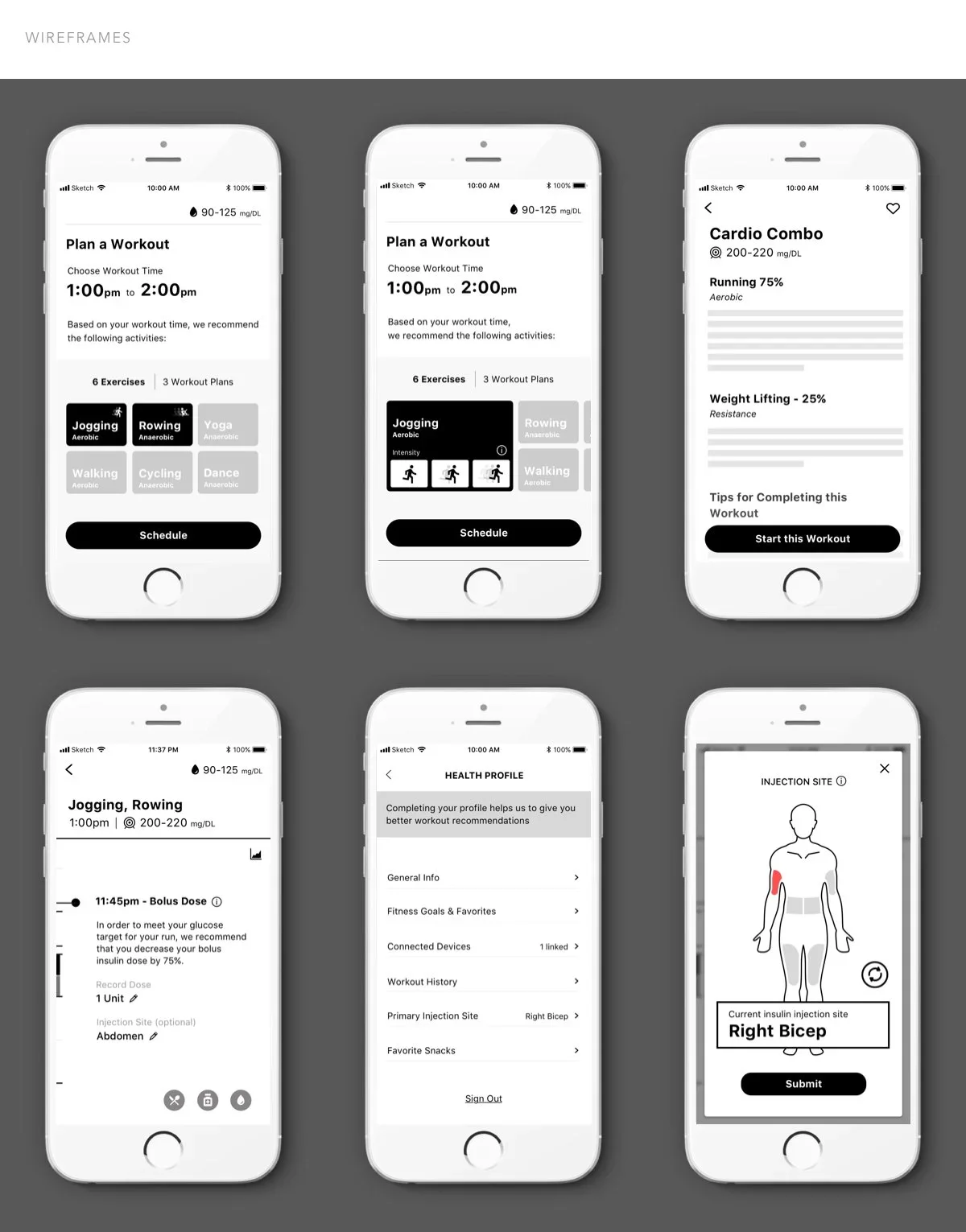
Insights were translated into shared principles and decision frameworks, which ultimately lead to product flows, wireframes, and a high fidelity proof of concept prototype.
Product Vision & Experience Strategy
Our product concept focused on personalized guidance rather than generic recommendations. Key experience principles included:
Instilling Confidence
The goal was not to turn users into experts, but to help them feel safe enough to participate.Education at the Right Moment
Information was delivered contextually—only when it meaningfully supported a decision.Transparency Without Alarm
Risks were communicated clearly but calmly, avoiding fear-based messaging.
Solution Overview
The Diabetes Activity Planner provided users with:
Activity-Specific Guidance
Deep dives into different exercise types, with explanations of how each type could affect blood glucose levels.Personalized Planning Support
Recommendations tailored to activity type, timing, and known user inputs.Integrated Insulin Considerations
The experience accounted for regular bolus dosing—introducing a complex but critical UX challenge that required close collaboration with clinical experts.Safety-First Design
The system prioritized preventing dangerous highs and lows while empowering users to gradually build confidence in their own decision-making.
Outcome
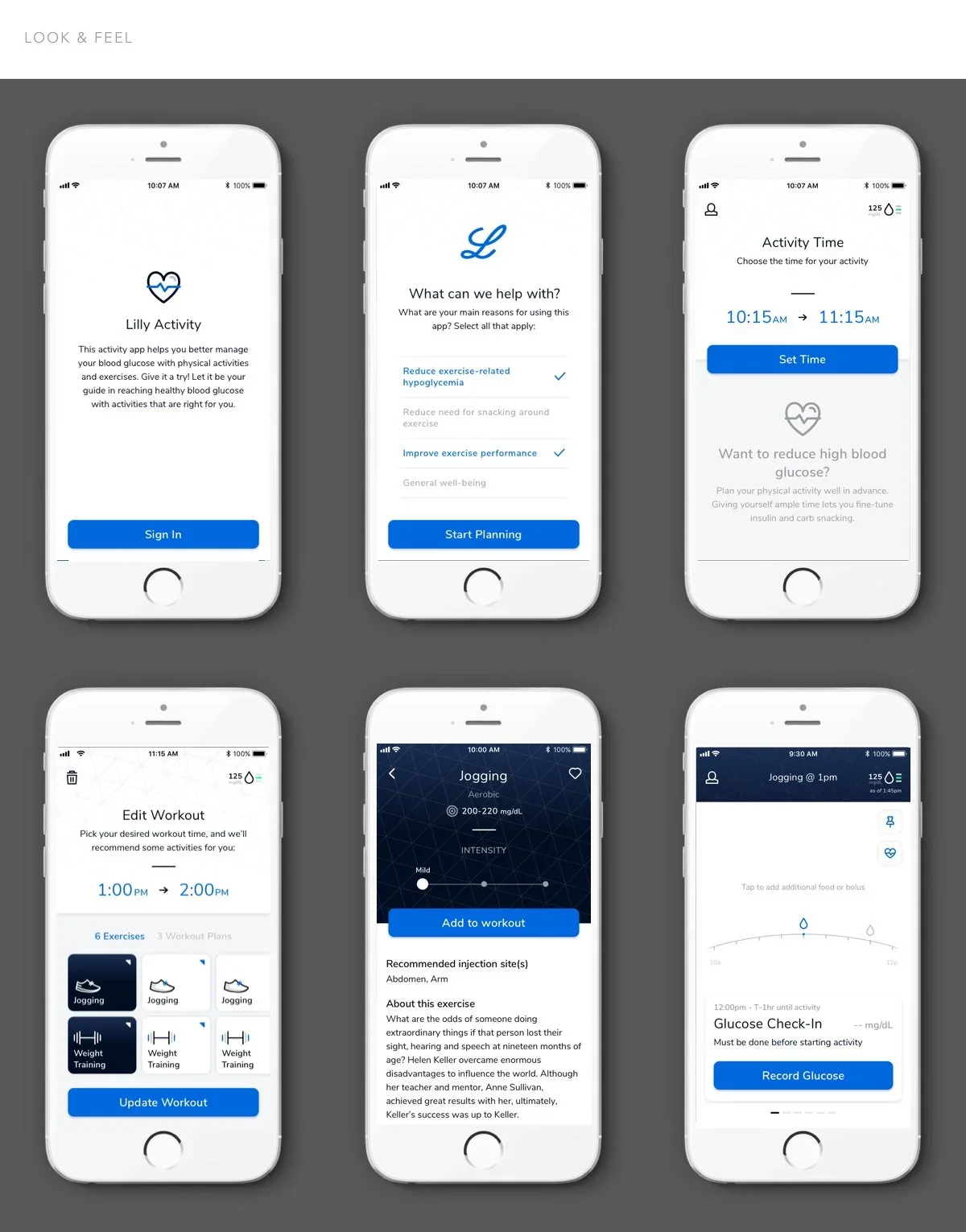
Our partnership with the Lilly team produced a proof of concept that made complex diabetes management actionable and approachable, without compromising clinical rigor. By reducing fear and uncertainty around exercise, the experience increased user confidence and readiness to engage in healthier behaviors.
The work established a scalable foundation for future B2C companion apps and demonstrated our team’s ability to take high-stakes products from zero to one.